
Biography
Thomas Burrill
Piano
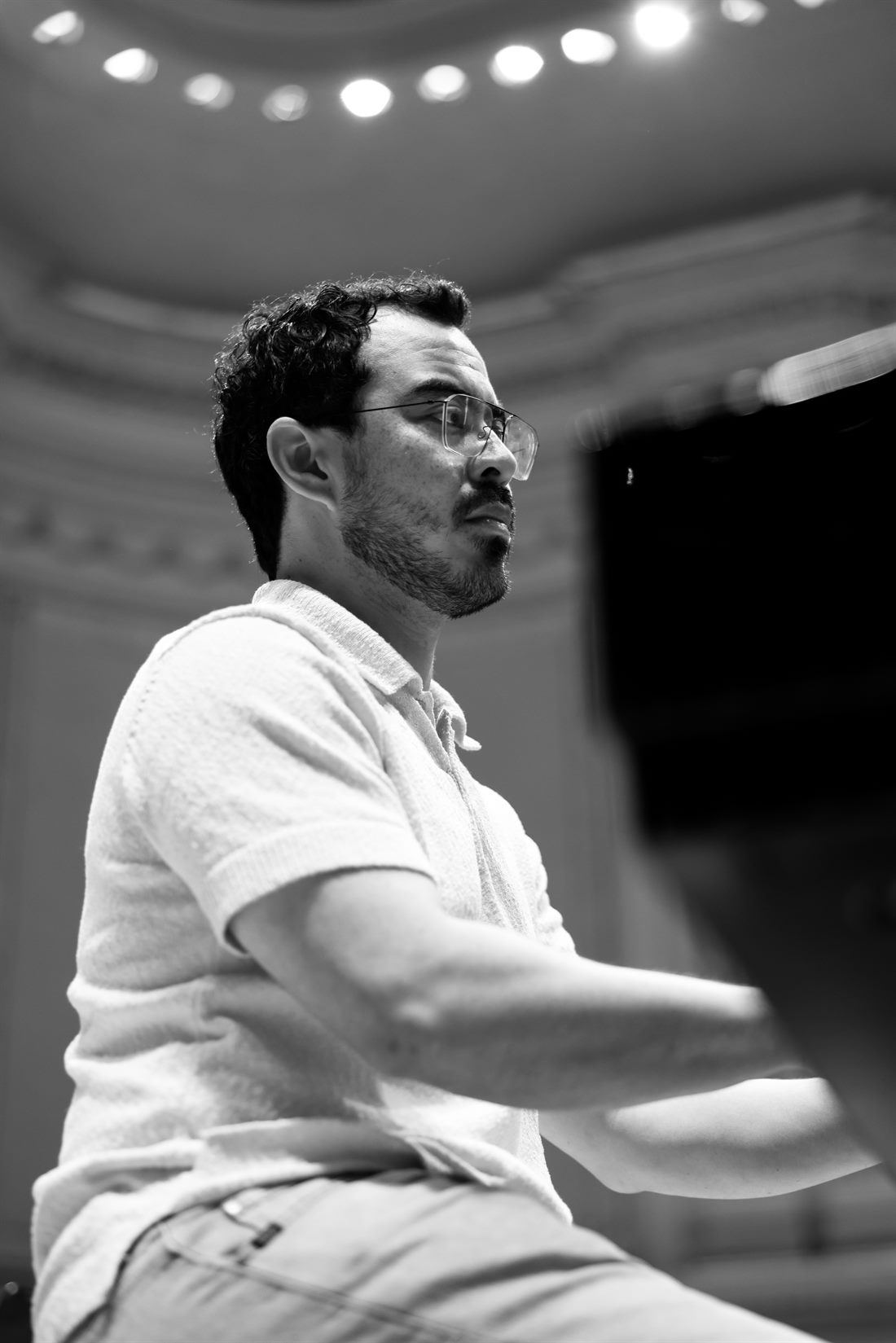
Born and raised in Iowa City, Iowa, pianist Thomas Burrill is a performer, educator and arts advocate whose career spans four continents. He has appeared on major stages including multiple appearances at Stern Auditorium at Carnegie Hall in New York, Boston's Jordan Hall and Symphony Hall, and Cleveland's Severance Hall. His performances have been broadcast nationally in the United States on National Public Radio, as well as on local stations nationwide, and have been supported by institutions such as the National Endowment for the Arts and the Boston Symphony Orchestra.
Teaching and outreach
Equally devoted to teaching, Thomas has held faculty and professional teaching roles in performance, chamber music, collaborative piano, theory and music history, including appointments at the New England Conservatory, and has served in artistic and administrative roles with programmes such as the Perlman Music Program and Morningside Music Bridge. His work as an educator extends beyond the conservatory setting into community-focused projects that support under-resourced communities, neurodivergent students and families. He has also contributed to designing and implementing performance and education initiatives supporting causes such as Alzheimer's research, collaborating with organisations and institutions including Harvard University, the University of Iowa and the Cure Alzheimer's Fund.
Collaboration
As both soloist and collaborator, he has worked closely with distinguished artists including Don Weilerstein, Laurence Lesser, Lluís Claret and Kim Kashkashian, as well as notable living composers such as Julian Anderson, and he frequently partners with visual artists, dancers and other cross-disciplinary collaborators. These projects reflect his belief that music functions as a meeting ground where diverse perspectives can be heard, challenged and held in common.
Training and leadership
Thomas holds advanced degrees from the New England Conservatory, where he studied solo and collaborative piano with mentors Vivian Weilerstein and Wha Kyung Byun. He concurrently serves in a senior leadership role at a UN-affiliated international arts organisation, supporting emerging artists and cultural diplomacy initiatives. Guided by the belief that music is not only to be performed but also shared in service of human connection, he continues to shape a career that unites performance, education and advocacy in pursuit of a more empathetic and interconnected world.
Nacido y criado en Iowa City (Iowa), el pianista Thomas Burrill es intérprete, pedagogo y promotor de las artes, con una carrera que abarca cuatro continentes. Ha actuado en escenarios de primer nivel, con diversas actuaciones en el Stern Auditorium del Carnegie Hall de Nueva York, en el Jordan Hall y el Symphony Hall de Boston y en el Severance Hall de Cleveland. Sus interpretaciones se han emitido a nivel nacional en Estados Unidos en National Public Radio, así como en emisoras locales de todo el país, y han contado con el apoyo de instituciones como el National Endowment for the Arts y la Boston Symphony Orchestra.
Docencia y proyección social
Igualmente comprometido con la enseñanza, Thomas ha ocupado puestos docentes y profesionales en interpretación, música de cámara, piano colaborativo, teoría e historia de la música, incluidos nombramientos en el New England Conservatory, y ha desempeñado funciones artísticas y administrativas en programas como el Perlman Music Program y Morningside Music Bridge. Su labor como educador se extiende más allá del ámbito del conservatorio hacia proyectos comunitarios que apoyan a comunidades con pocos recursos, estudiantes neurodivergentes y familias. También ha contribuido al diseño y la puesta en marcha de iniciativas de interpretación y educación en apoyo de causas como la investigación sobre el alzhéimer, colaborando con organizaciones e instituciones como la Universidad de Harvard, la Universidad de Iowa y el Cure Alzheimer's Fund.
Colaboración
Como solista y como colaborador, ha trabajado estrechamente con artistas destacados como Don Weilerstein, Laurence Lesser, Lluís Claret y Kim Kashkashian, así como con compositores vivos de relevancia como Julian Anderson, y colabora con frecuencia con artistas visuales, bailarines y otros creadores interdisciplinares. Estos proyectos reflejan su convicción de que la música funciona como un lugar de encuentro donde perspectivas diversas pueden escucharse, cuestionarse y compartirse.
Formación y liderazgo
Thomas posee estudios superiores del New England Conservatory, donde cursó piano solista y colaborativo con los maestros Vivian Weilerstein y Wha Kyung Byun. Paralelamente ocupa un puesto de alta dirección en una organización artística internacional afiliada a la ONU, apoyando a artistas emergentes e iniciativas de diplomacia cultural. Guiado por la convicción de que la música no solo debe interpretarse, sino también compartirse al servicio de la conexión humana, continúa construyendo una carrera que une interpretación, educación y activismo en busca de un mundo más empático e interconectado.